Why yearly maintenance matters more in Houston
Here, the AC is the hardest-working machine in the house. National Weather Service records for Houston put the average first 90-degree day on May 6 and the average last one on October 7. That’s five months of long run times in humid air, often with the indoor unit sitting in a hot attic.
The heater has the opposite problem. It sits most of the year, then gets switched on the first cold night. Houston’s average first freeze is December 9, but it has come as early as October 20 (in 1989). ENERGY STAR recommends “annual pre-season check-ups” for heating and cooling systems, so small things like a dirty coil, a slow drain or a loose wire get caught while they’re still small.
What a proper AC tune-up includes
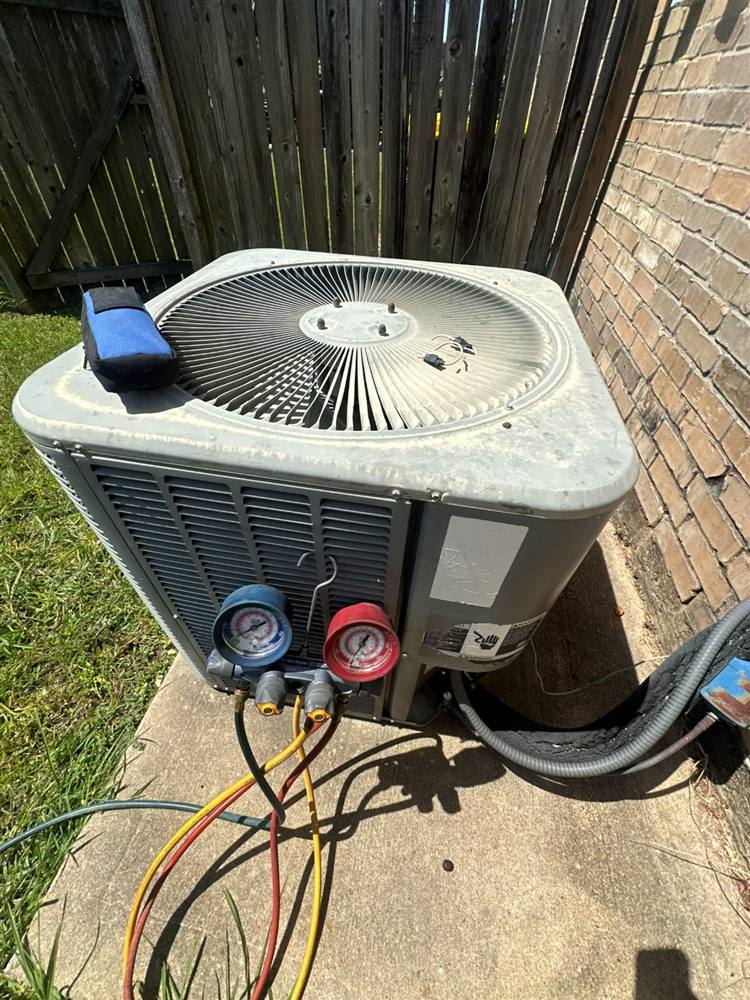
There’s no single checklist every company uses. ENERGY STAR’s maintenance checklist is a good yardstick: clean the indoor and outdoor coils, check the refrigerant level, check and clear the condensate drain, tighten electrical connections, lubricate moving parts, clean and adjust the blower, and check the controls and thermostat. Clean coils and a clean blower matter because, in ENERGY STAR’s words, “Airflow problems can reduce your system’s efficiency by up to 15 percent.” For contractors, the industry minimum is ACCA 4 QM, “Quality Maintenance of Residential HVAC Systems.”
How Turbo Shield lines up. A Turbo Shield visit includes cleaning both coils, flushing the AC drain line and a heater check, with a carbon monoxide test on gas heat. Ask your technician which of the other items above are checked on your system.
What a heater check includes
For gas heat, ENERGY STAR’s list adds one more line: “Check all gas (or oil) connections, gas pressure, burner combustion and heat exchanger.” The electrical, blower, control and thermostat checks apply to the heating side too.
A heat pump heats and cools with the same outdoor unit, so it works in both seasons. Ask your technician what your heat pump needs, or see our heat pump page. If your heater already isn’t working right, that’s a repair visit, not a tune-up: see heating and furnace repair.
The carbon monoxide (CO) test on gas heat
A gas furnace burns natural gas and sends the exhaust outside through a vent. If the burners aren’t burning cleanly, or the vent or heat exchanger has a problem, carbon monoxide can end up where it shouldn’t be. You can’t see it or smell it. The U.S. Consumer Product Safety Commission recommends a professional inspection of gas heating equipment every year.
Turbo Shield and Winter Home Check heater visits on gas heat include a carbon monoxide test. That test tells you how things look on the day of the visit. It doesn’t replace CO alarms, so keep working alarms in the house. If an alarm goes off, get everyone outside and call 911. If you smell gas, leave first, then call 911 and CenterPoint Energy from outside.
Filters: the part you can do yourself
The filter is the one piece of maintenance that’s yours (thicker whole-house media filters are covered on our indoor air quality page). Check it every month from spring through fall, and change it at least every 3 months (ENERGY STAR’s rule).
A clogged filter chokes the airflow your system depends on. The U.S. Department of Energy’s home cooling guide (2014) says routinely replacing or cleaning air filters “can lower your air conditioner’s energy consumption by 5-15 percent.”
Two more easy jobs: keep the outdoor unit clear of grass clippings, leaves and plants, and keep supply vents and return grilles open and unblocked. Leave the electrical parts, the refrigerant and the gas connections to a licensed technician.
Drain-line care in Houston’s humidity
Your AC doesn’t just cool the air. It pulls water out of it, and in a Houston summer that’s a lot of water. It leaves through a small drain line (the condensate line), and over a season, algae and sludge can build up inside. ENERGY STAR puts it plainly: “A plugged drain can cause water damage in the house and affect indoor humidity levels.” If yours is already backing up, see clogged AC drain line cleaning.
What to watch for between visits:
• While the AC runs, water should drip steadily from the end of the drain line.
• Water dripping from a pipe above a window or under the eaves often means the backup drain is doing its job because the main line is clogged. Have it cleared soon.
• A water stain on the ceiling below the attic unit is a sign to turn the AC off and call.
A Turbo Shield visit includes an AC drain line flush. If water is already leaking, see AC repair.
Manufacturer warranties and maintenance records
You’ll often hear that manufacturers require a yearly tune-up to keep your warranty. We checked the warranty documents of four major brands in November 2026, and none of them says exactly that. Here’s what they do say:
• Lennox (Basic Limited Warranty): “Failure to maintain equipment will void this Basic Limited Warranty,” and “Proof of prior maintenance and purchase may also be required at Lennox’s sole discretion.”
• Trane / American Standard (base limited warranty, February 2026): parts are covered against defects subject to “normal use and maintenance,” and repairs must be made “by a licensed service provider.”
• Carrier (AC and heat pump outdoor units): “Installation, use, care, and maintenance must be normal and in accordance with instructions contained in the Installation Instructions, Owner’s Manual and Company’s service information.”
• Goodman (2014 warranty document): coverage applies “under normal use and maintenance” and excludes “repairs resulting from any improper use, maintenance, operation, or servicing.”
What that means for you: read your own warranty, because terms differ by brand, model and date. Keep the paperwork from every maintenance visit, with the date on it, in case the manufacturer asks for proof. And register new equipment on time. Carrier, for example, asks for registration within 90 days of installation (otherwise the coverage is 5 years).
When to book in Houston
ENERGY STAR’s rule of thumb is to “check the cooling system in the spring and the heating system in the fall.” Here’s how that lines up with Houston’s weather:
• AC: March or April. That’s before the average first 90-degree day on May 6. CenterPoint Energy also says to test your cooling in spring, “before the first heat wave hits.”
• Heater: October or November. That’s before the average first freeze on December 9, and remember it has come as early as October 20. CenterPoint’s tip for heating: “Turn it on for a bit in September or October.”
If your AC is already struggling in July, don’t wait for spring. That’s a repair call, and finding the problem is free for homes. If the same system keeps needing repairs, repair or replace your AC explains how to weigh it.
A gentle hose rinse on a dirty condenser coil. Shut off the power first and never use a pressure washer. Watch on YouTube
Sources: ENERGY STAR, maintenance checklist · ENERGY STAR, heat and cool efficiently · U.S. DOE, Home Cooling 101 (2014, PDF) · ACCA 4 QM, Quality Maintenance of Residential HVAC Systems · National Weather Service Houston/Galveston, heat and cold stats · CenterPoint Energy, HVAC maintenance schedule · U.S. CPSC, carbon monoxide and home heating · Lennox Basic Limited Warranty (PDF) · Trane base limited warranty (PDF) · Carrier limited warranty (PDF) · Goodman limited warranty (PDF). Checked November 2026.